Maximum pressure
2.4 ATA
The level used in clinical settings. Other private providers in the Czech Republic reach 1.5 ATA at most.
A comprehensive guide for anyone who wants to understand how HBOT works, who it is suitable for and what to expect from it.
Hyperbaric oxygen therapy is a therapeutic method in which you breathe pure oxygen inside a closed pressure chamber at a pressure higher than normal atmospheric pressure. The UHMS (Undersea and Hyperbaric Medical Society) defines it as the administration of oxygen at a pressure of at least 1.4 ATA. All clinically recognised indications require at least 2.0 ATA.
Under normal conditions oxygen is carried through the body by haemoglobin in red blood cells. That system has a physiological ceiling. With ordinary breathing, haemoglobin is about 98% saturated and cannot carry any more oxygen. Raised pressure in a hyperbaric chamber makes oxygen dissolve directly in blood plasma. This markedly increases the total amount of oxygen circulating in the body and its availability to the tissues.
Oxygen dissolved in plasma reaches areas where blood flow is limited or where tissue is hypoxic — after surgery, in inflammation, in scar tissue or after radiotherapy. In those areas it triggers a cascade of biological processes: the formation of new blood vessels (angiogenesis), reduced inflammation, activation of stem cells and faster cellular regeneration.
Source: Bhutani S, Vishwanath G. Hyperbaric oxygen and wound healing. Indian J Plast Surg, 2012; and UHMS Indications for Hyperbaric Oxygen Therapy, 14th edition.
The therapeutic effect of HBOT depends directly on the pressure reached. Different indications need different protocols, and oxygen dissolved in plasma rises with pressure in a non-linear way. Biologically, the difference between 1.5 ATA and 2.4 ATA is fundamental.
The Czech market has facilities offering “hyperbaric therapy” at 1.3 to 1.5 ATA. At those levels the amount of oxygen dissolved in plasma is clinically insignificant. These are wellness procedures that share nothing but the name with hyperbaric therapy in the clinical sense.
Another important parameter is the way the oxygen is delivered. The BIBS (Built-In Breathing System) delivers pure oxygen through a closed mask straight into the airways. A nasal cannula inside a pressure chamber, by contrast, lets the oxygen mix with chamber air, so the concentration reaching the airways is considerably lower.
Clinical pressure and oxygen purity versus wellness procedures.
The Czech market offers various things labelled “HBOT”. The parameters that directly affect the therapeutic outcome differ substantially. This is how real clinical HBOT compares with wellness chambers.
The level used in clinical settings. Other private providers in the Czech Republic reach 1.5 ATA at most.
A closed mask delivers pure oxygen straight into the airways. No dilution by chamber air.
A professional oxygen station with filtration. Consistent values in every session.
With a nasal cannula the client exhales back into the chamber. The exhaled air mixes with the oxygen from the cannula, raises the oxygen concentration inside the closed space above a safe level and at the same time markedly lowers the purity of what the client breathes in. BIBS is a closed system that carries exhaled air entirely out of the chamber, so every breath contains pure oxygen without dilution.
HBOT has a wide range of uses. Some indications are internationally recognised by the UHMS and supported by large clinical studies; other areas are the subject of ongoing research. Choose the area that applies to you:
Tinnitus, diabetic foot, chronic fatigue, Lyme disease, neuropathy and other long-term conditions involving inflammation and tissue hypoxia.
Find out moreBiological optimisation at cell level. A protocol based on Dr Efrati’s study: telomere lengthening and a decrease in senescence.
Find out moreFaster recovery, healing of injuries and better performance. Technology used by leading athletes worldwide.
Find out moreSupport for wound healing, less swelling and finer scars. Suitable both before and after a surgical or cosmetic procedure.
Find out moreBetter blood flow to the endometrium, egg quality and less inflammation. Coordinated with your IVF protocol and your doctor.
Find out moreSupport after a stroke, in neurodegenerative disease and in the prevention of cognitive decline.
Find out more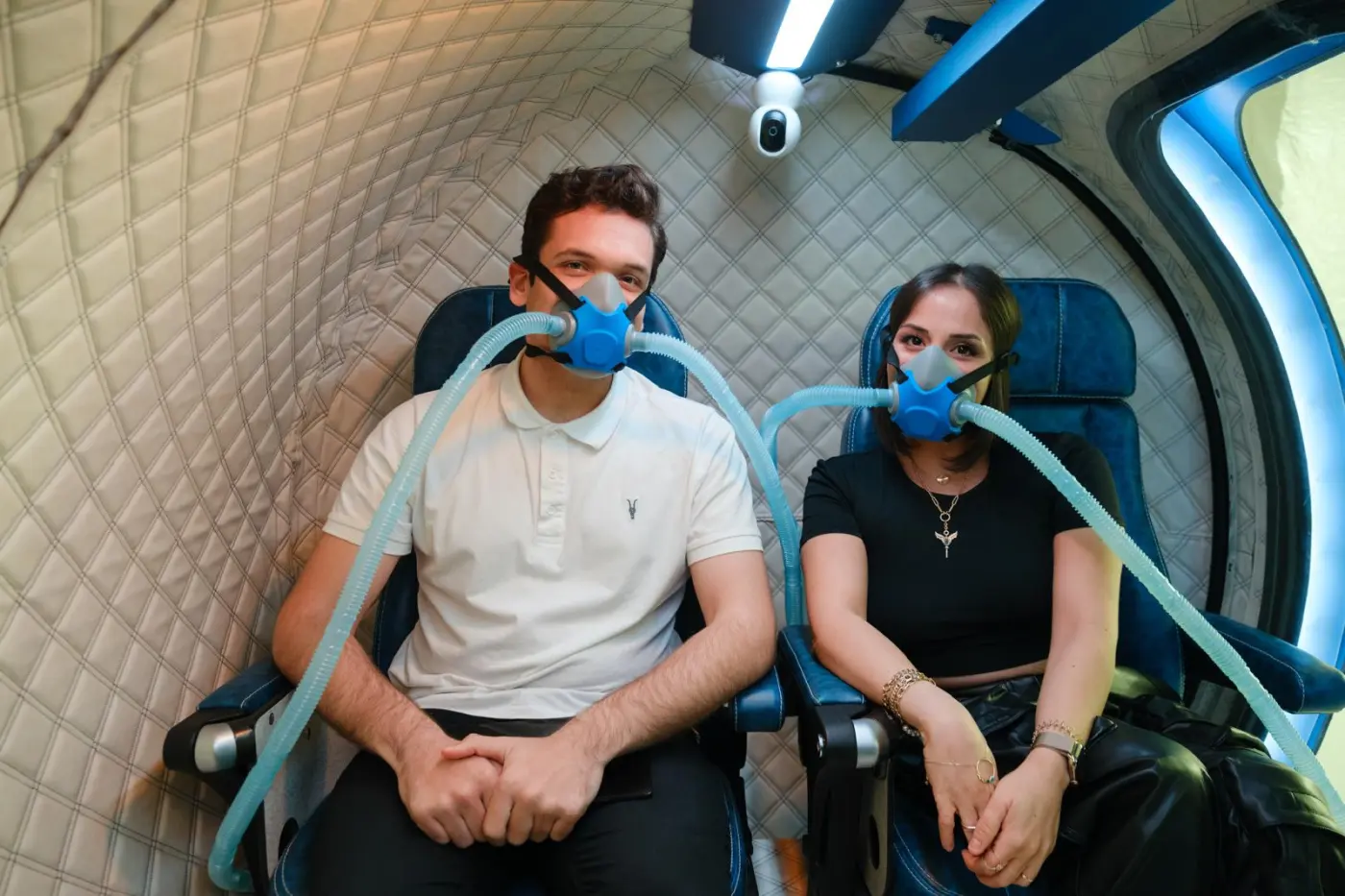
Time in the chamber is undemanding and needs no preparation. Before your first session we go through your state of health, rule out contraindications and set the protocol.
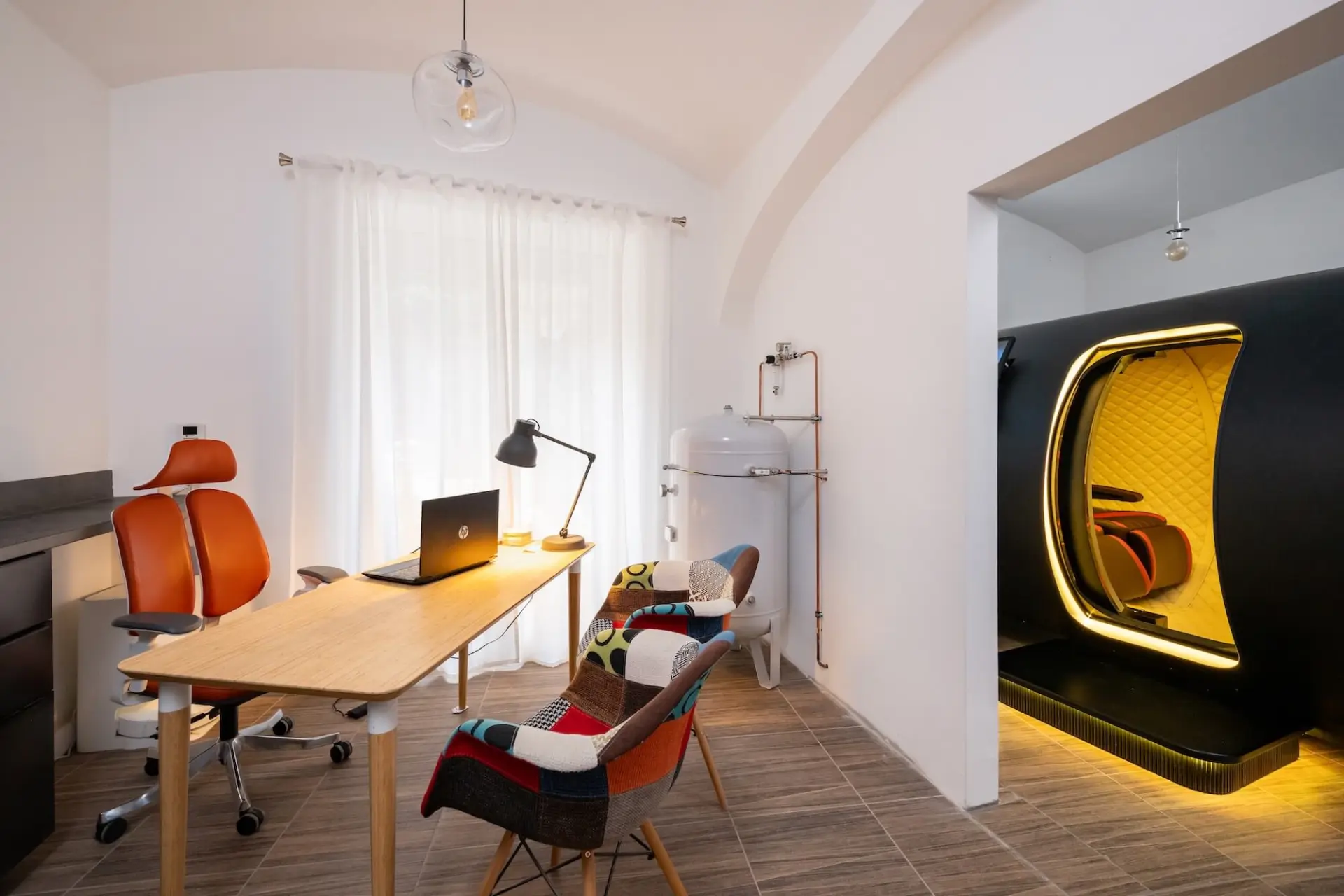
The HPO Giza chamber in central Prague. Rigid construction, clinical pressure up to 2.4 ATA, a spacious interior for four people. Click to enlarge.
Get in touch. We’ll go through what you are dealing with and recommend the best next step. No pressure, no overpromising.
Opening hours: Mon–Fri 9am–7pm
Message us on WhatsApp any time. We’ll reply as soon as we can.HBOT is a conventional therapy with a long history of clinical use. It is internationally recognised by the UHMS for a number of indications and forms part of standard care in hospital hyperbaric centres around the world. It is not alternative medicine, nor a wellness procedure in the usual sense of the word.
Normobaric oxygen therapy takes place at normal atmospheric pressure, usually through a nasal cannula. At that pressure oxygen barely dissolves in blood plasma and the therapeutic effect is fundamentally limited. HBOT requires raised pressure in a closed chamber. Without pressure it is not hyperbaric therapy, whatever the service is called.
No. HBOT is an adjunctive therapy, not a replacement for conventional treatment. It works best alongside the treatment recommended by your doctor. We always recommend discussing HBOT with your treating physician, especially if you have a serious medical condition or take medication.
When performed correctly, HBOT is a safe therapy. The most common side effect is mild pressure in the ears during pressurisation, which is easy to equalise. Rarely, a temporary change in vision or mild fatigue can occur. Serious side effects are very rare. A systematic review of 24 randomised trials covering 1,497 patients confirmed a good safety profile for the therapy.
It depends on the indication. For sports recovery 5 sessions are sometimes enough. For post-operative healing a series of 10 to 20 sessions is usual. For chronic conditions or neurological indications 20 to 40 sessions are recommended. We set the specific protocol individually after the initial consultation.